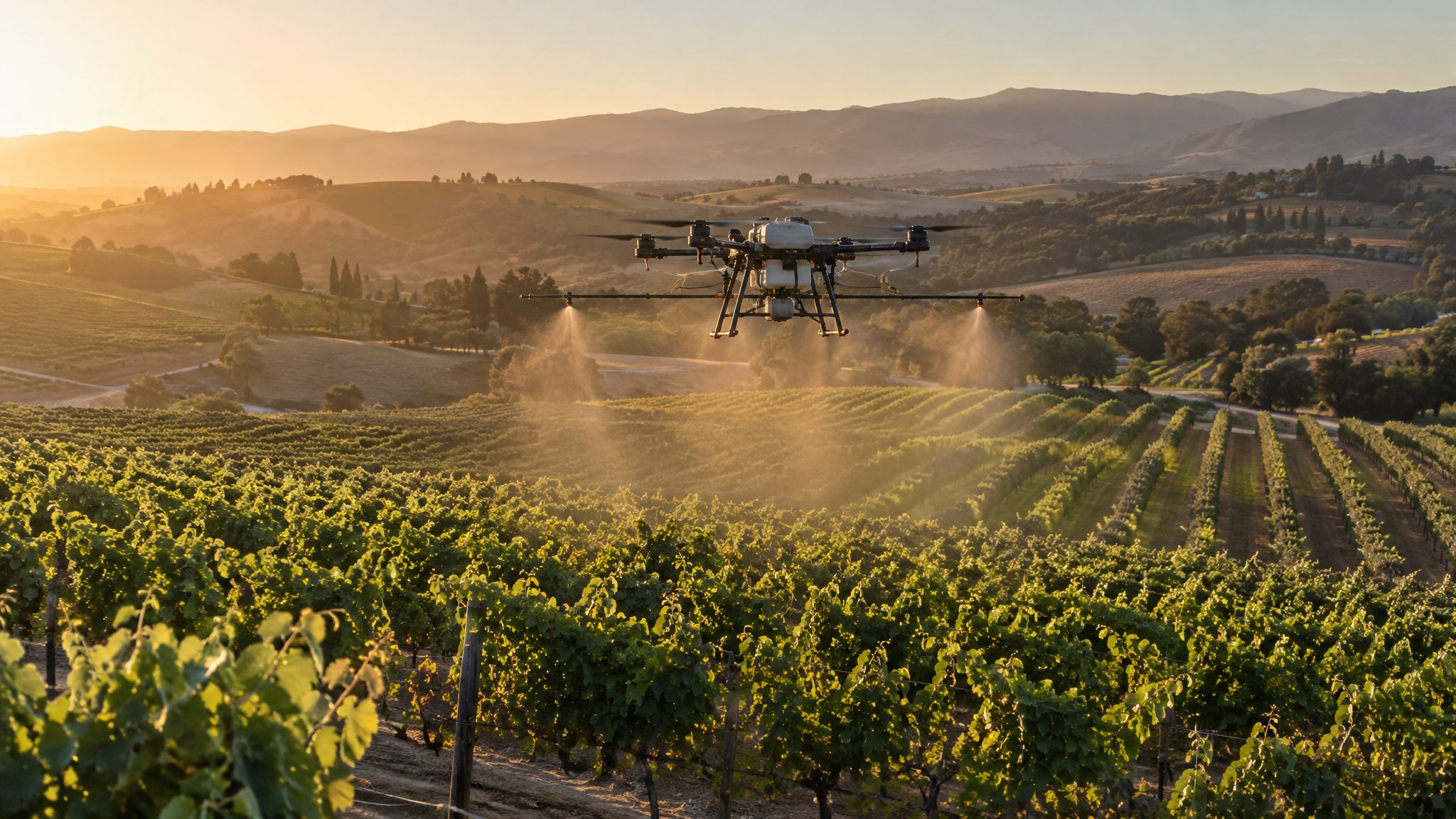
Drone Spraying for Orchards and Vineyards
Canopy, terrain, row spacing and minimum-job questions to answer before hiring a drone for specialty-crop spraying.
Why specialty crops use drones
Orchards, vineyards and other specialty crops are often on slopes, terraces or wet ground where ground rigs struggle. Drones can treat these blocks, hotspots and edges quickly, and can complement ground spraying rather than replace it.
Canopy and coverage
Dense canopies are harder to penetrate than row crops. Ask how the operator sets flight height, speed, swath and droplet size for your canopy, and whether they have sprayed the same crop and training system before.
Terrain, obstacles and neighbours
Describe slopes, trellis wires, power lines, windbreaks, buildings and nearby houses, roads and water. Terrain-following and obstacle-sensing aircraft help, but site planning and buffer zones still matter.
Minimum jobs and logistics
Many operators set a minimum job size or mobilisation fee. Grouping blocks or coordinating with neighbours can make small jobs viable. Confirm water and mixing access, battery charging and landing areas.
Records and compliance
Confirm the product label permits the intended method, who supplies the product, and that you will receive an application record and coverage map. Always follow the label and current regulator guidance.
Ready to compare providers?
Describe your project once and get quotes from suitable agricultural drone providers.